


Front fence designs in Melbourne
- Sepehr Mardani
- Sep 16, 2025
- 5 min read


A great front fence does more than mark a boundary, it frames your home, protects what matters and sets the tone from the street. The challenge? Balancing fence design, council rules, slope or driveway sightlines, and materials that actually last in Victoria’s weather. At Walnut Fencing in Hallam, we design, fabricate and install front fences that look sharp, perform for years, and make access simple with matching gates and automation.
You can listen to this blog here!
What makes a great front fence?
Start with outcomes, not just looks. A successful design usually balances:
Street appeal: Proportions, rhythm, colours and textures that complement your facade.
Safety and visibility: Driveway clear-sight zones, pedestrian line-of-sight and compliant safety fences around hazards.
Privacy: Managing views from the street without blocking winter sun or airflow.
Durability: Materials and coatings that resist corrosion and UV in Melbourne’s four-seasons-in-a-day climate.
Access: Integrated pedestrian and vehicle gates, intercoms and automation.
Maintenance: Choose profiles and finishes that are easy to keep clean.
Pro tip: Design gates and the front fence together so stiles, rails and slat lines align perfectly. It reads as one intentional gesture from the street.
Materials & styles that work in Victoria
We build custom built fences in steel and aluminium and pair them with masonry or rendered elements when the brief calls for it. Here’s how key options stack up.
1) Tubular steel & aluminium (flat-top, rod-top, spear-top)
Also called fence tubular, these classic profiles suit a wide range of homes from period to contemporary.
Why choose it: Strong, secure, excellent airflow and sightlines. Flat-top reads modern; rod-top is a little softer; spear-top adds a deterrent where extra security is needed.
Best for: Family homes needing visibility at the driveway, schools/childcare (with compliant spacing), or where a lighter visual touch suits the streetscape.
Design notes: Keep picket spacing consistent with balustrades or porch details for a cohesive look.

2) Vertical blade / batten (architectural fences)
A favourite for architectural fences, vertical blades create striking shadows and a premium feel.
Why choose it: High design impact; adjustable privacy by altering blade width and gap; works beautifully with timber or stone accents.
Best for: Contemporary facades and corner blocks where the fence is highly visible.
Design notes: Alternate blade depths (e.g., 50×10 and 50×25) to add subtle texture without clutter.
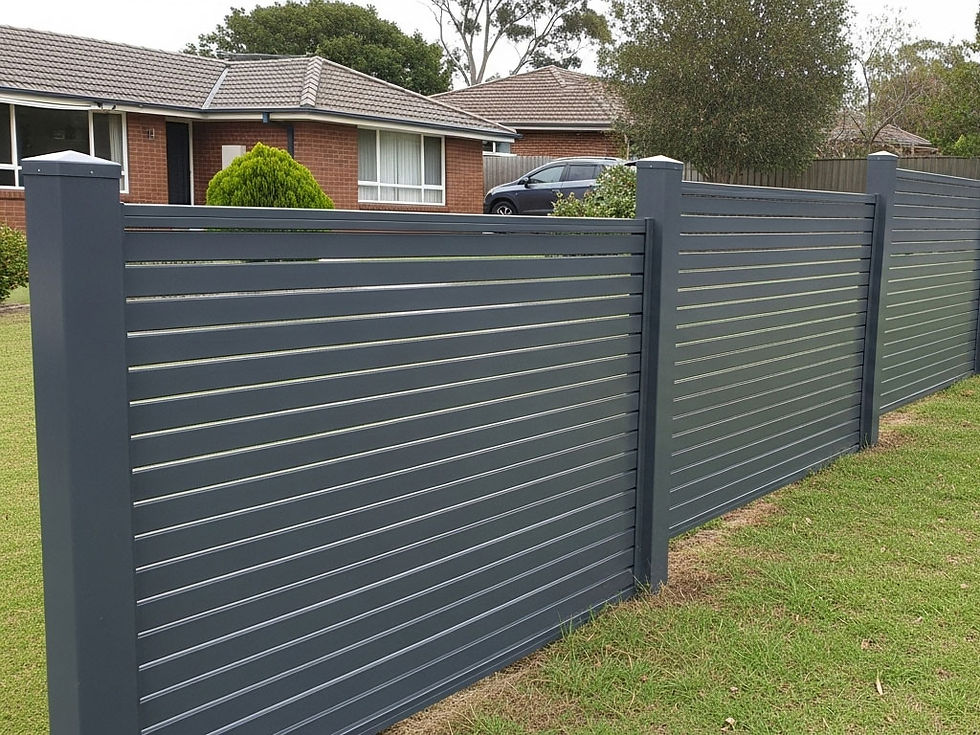
3) Aluminium slats (horizontal or vertical)
Sleek, low-maintenance and endlessly customisable. Perfect when you want privacy without going solid.
Why choose it: Won’t rust, light yet strong, powder-coat in Colorbond-inspired tones or crisp whites.
Best for: Coastal suburbs, modern builds, or when you want to echo horizontal cladding lines.
Design notes: Vary slat gaps (e.g., 5–20 mm) to tune privacy and light.
4) Masonry & rendered fences with pillars
A rendered fence with defined fence pillars (piers) feels substantial and can lower traffic noise a touch. Pair with metal infills to reduce bulk.
Why choose it: Premium presence; hides bins and front courtyards; integrates letterbox, house numbers and intercom neatly.
Best for: Wide frontages and homes with a strong architectural language.
Design notes: Keep pillar centres consistent so gate openings align perfectly. Consider a shadow-line or capping detail to shed water.
5) Corrugated sheet infill (modern twist)
Corrugated fence sheets aren’t just for back boundaries anymore. Done right framed with slim steel and paired with rendered piers or timber, they become a bold, industrial-chic statement.
Why choose it: Durable, budget-friendly, surprisingly versatile in the right composition.
Best for: Modern/industrial homes or mixed-material facades.
Design notes: Use colour to dial back reflectivity; combine with vertical elements so it doesn’t read as a shed panel.

How high can a front fence be? (and what “highest fence” really means)
Most Melbourne councils limit front fence height to keep streets open and safe, often around the 1.2 m mark near the frontage, with different rules at side returns. Corner blocks and driveways bring extra visibility rules. There’s no single “highest fence” allowed across Victoria; local permits and overlays control the upper limit.
Our approach: we’ll sketch a concept you love, then liaise with you (and your designer or builder) to confirm it suits your council’s rules. If a planning permit is required, we can support with shop drawings and engineering as needed.
Details that make your front fence feel “designed”
Small touches elevate a fence from functional to special:
Gate automation: Discreet motors, soft-start/stop, battery backup, app-based remotes.
Intercom & access control: Video doorbells, keypad entries, parcel lockers.
Letterboxes & house numbers: Integrated, back-opening models keep the street elevation clean.
Powder-coat finishes: Match your windows, roof or garage door. Whites (e.g., Surfmist-like) for coastal brightness; deeper tones (e.g., Monument-like) for crisp contrast.
Footings & drainage: Proper pier design, weep holes in solid sections, and fall-away caps stop water staining and prolong life.
Slopes & steps: Rake the infills to follow grade, or step panels and cap rails so the fence looks intentional on uneven ground.
For fencers and builders: what you’ll like about working with Walnut
We collaborate with trade partners across the south-east. If you’re a fencer or builder:
Supply-only or turnkey: Shop-drawn panels, gates and posts cut-to-size for smooth installs, or full install by our team.
Custom built fences with jigs for repeatability, tight tolerances on blade spacing and slat gaps.
Pre-hung gates & hardware: Hinges aligned, latches positioned, automation-ready track and rack fitted where specified.
Clear documentation: Marked drawings for pillar centres, footing depths and set-outs; finish schedules and care guides for your client handover.
Short lead times: Local Hallam fabrication keeps timelines predictable.
The result? Fewer site surprises, a neater finish, and happy clients who call you back.

Quick comparison of popular front fence options
Style (look) | Privacy | Maintenance | Best use case |
Tubular steel/aluminium (flat/rod/spear) | Low–Medium | Low | Classic homes, driveway visibility, safety fences where sightlines matter |
Vertical blade / batten (architectural) | Medium | Low | Architectural fences, strong street presence without going solid |
Aluminium slat (horizontal/vertical) | Medium–High | Very Low | Modern builds, coastal areas, matching garage/roof colours |
Rendered piers + metal infills | Medium–High | Medium | Premium frontages, integrated gates/intercoms with balanced mass |
Why choose Walnut for your front fence
Design-led, engineered execution: We align aesthetics with structure, installation and maintenance from day one.
Custom, local fabrication: Steel or aluminium, we cut, weld, and finish to suit your site, not a catalogue.
End-to-end or collaborative: Work directly with homeowners, architects and fencers; supply-only or full project delivery.
Future-proofing: We plan for automation, cabling, drainage and access now so you don’t chase fixes later.
Respect for your street: Sightlines, setbacks and neighbourhood character matter. We design to enhance them.
Ready to talk about your front fence?
Whether you need a simple fence tubular solution that keeps sightlines clear, a rendered fence with elegant fence pillars, or a bold architectural fence in blades or slats, we’ll help you nail the balance of privacy, security and style and match it with gates, hardware and automation that just work.
Let’s design your front fence right the first time. Get in touch with Walnut Fencing to book a site visit or send through your plans for a quick, practical design conversation.



Comments